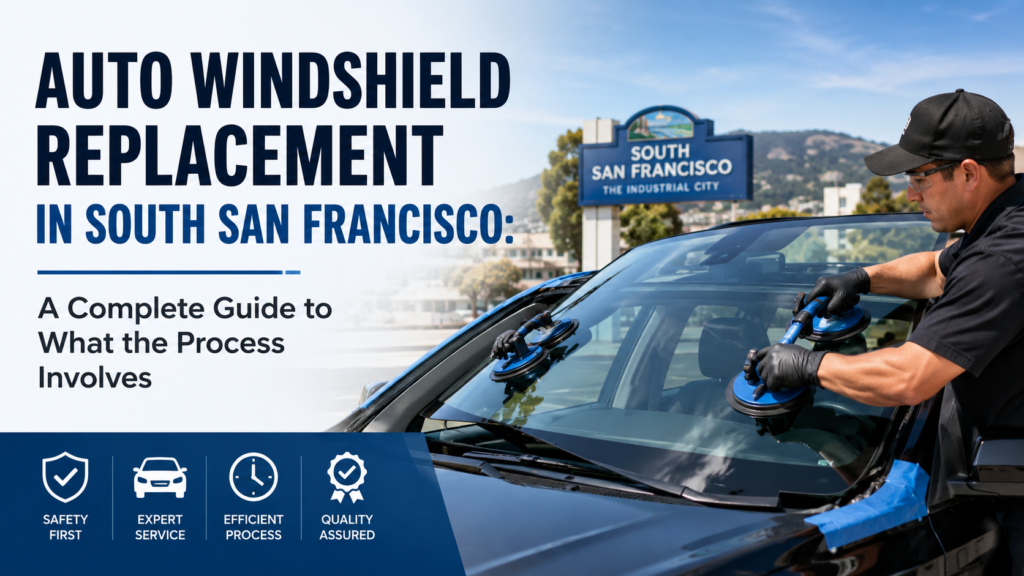
When windshield damage is too extensive to repair, a crack longer than three inches, a chip in the driver direct sight line, damage at the edge of the glass, or an impact that has penetrated through both layers of the laminated windshield, replacement is required. For Auto Windshield Replacement South San Francisco
drivers, windshield replacement is a more complex service than it initially appears. Modern windshields are not simply glass panels. They are integrated components of the vehicle safety system, structural frame, and for many modern vehicles the platform for advanced driver assistance technologies. Understanding what windshield replacement involves, from glass selection through installation and ADAS recalibration, helps South San Francisco drivers approach this service with informed expectations.
When Replacement Is Required
Replacement is the appropriate response when damage exceeds the parameters for repair:
- Cracks exceeding three inches. Longer cracks reduce structural strength across a significant windshield area and exceed the resin ability to restore adequate integrity. In the Bay Area vibration-heavy driving environment at highway speeds on rough surface streets, a long crack will continue to spread if not replaced.
- Edge damage. Any crack or chip within approximately two inches of the windshield perimeter compromises the urethane adhesive bond securing the glass to the vehicle frame. This bond is structurally critical for rollover resistance and airbag backstop function.
- Driver sight line damage. Even a repairable-sized chip may warrant replacement if it falls directly in the driver primary forward view where the slight optical distortion from repair resin would create visual interference.
- Through-and-through penetration. Impacts that penetrate both glass layers and the PVB interlayer create structural failures that repair resin cannot address.
- Extensive multiple damage. A windshield with numerous chips, cracks, and pits from cumulative damage may no longer provide safe visibility regardless of whether individual damage points are technically repairable.
OEM vs. Aftermarket Glass
South San Francisco drivers will often encounter a choice between OEM and aftermarket windshield glass. OEM glass is manufactured to the exact specifications as the original windshield installed by the vehicle manufacturer, often by the same supplier. It meets the precise dimensions, optical quality, acoustic properties, and any integrated technology specifications designed for the vehicle. OEM-equivalent aftermarket glass from reputable manufacturers performs equivalently for most standard vehicles. For vehicles with integrated ADAS systems, heads-up displays, rain-sensing wipers, heated glass, or solar-reflective coatings, OEM glass is strongly preferred to ensure all features function correctly with the replacement. Given South San Francisco high proportion of technology-industry workers who often drive technologically advanced vehicles including Teslas, European luxury brands, and tech-forward domestic vehicles, confirming the glass specification before the service appointment is particularly important.
The Replacement Installation Process
Professional windshield replacement follows a defined sequence ensuring structural and safety integrity. Interior surfaces near the windshield including dashboard, sensors, and trim are protected. The existing adhesive seal is cut carefully around the perimeter using tools that sever the urethane bond without damaging the metal pinch weld that the windshield bonds to. The old windshield is removed and the pinch weld inspected for rust or damage. Old adhesive is trimmed from the bonding surface, the metal cleaned, and primer applied to promote maximum adhesion of the new urethane. Sensors, cameras, rain-sensing modules, and mounting brackets are carefully transferred from the old glass to the new windshield or the new glass arrives with these components pre-installed. High-quality automotive urethane adhesive is applied in a continuous bead to the frame or new glass, and the replacement windshield is positioned and set precisely. The installed glass must cure to its minimum safe drive-away strength before the vehicle is driven, typically one to four hours depending on the adhesive type and ambient conditions.
ADAS Recalibration After Replacement
For South San Francisco drivers with vehicles equipped with Advanced Driver Assistance Systems, windshield replacement triggers a mandatory ADAS recalibration requirement. ADAS systems including forward collision warning, automatic emergency braking, lane departure warning, and adaptive cruise control rely on cameras mounted to or behind the windshield. When the windshield is replaced, even a tiny change in camera positioning relative to the vehicle axis affects the accuracy of these safety systems. Static calibration is performed in a controlled shop environment using manufacturer-specific target panels at precise distances and angles. Dynamic calibration involves driving at specific speeds on public roads while the system uses real-world data to update its parameters. Some manufacturers require both types. The calibration process typically takes one to three hours. An uncalibrated ADAS system is a genuine safety risk: lane departure warnings may trigger incorrectly or fail to trigger, automatic emergency braking may react to phantom objects or fail to respond to real hazards, and adaptive cruise control may maintain incorrect following distances.
California Insurance and ADAS Coverage
California drivers with comprehensive auto insurance coverage are typically entitled to windshield replacement with payment of their applicable deductible. California law prohibits insurers from raising rates solely because of an auto glass claim. ADAS recalibration after replacement is increasingly recognized by California insurers as part of the covered windshield replacement scope. South San Francisco drivers whose vehicles require recalibration should confirm with their insurer that recalibration is included in covered scope before authorizing the replacement service, ensuring they are fully informed about their financial responsibility before the work begins.
Conclusion
Auto windshield replacement in South San Francisco is a safety-critical service requiring correct glass selection, professional urethane adhesive installation and curing management, and for the many modern vehicles equipped with advanced safety systems, ADAS recalibration before the vehicle returns to active driving. South San Francisco drivers who understand what this process involves, confirm the glass specification for their vehicle, and ensure ADAS recalibration is included when required invest in a replacement that restores their vehicle full safety performance for the Bay Area roads ahead.